Research note
USDA awards more than $19 million to greenhouse modernization projects
By Noah Langenfeld, United Greenhouse Growers Association
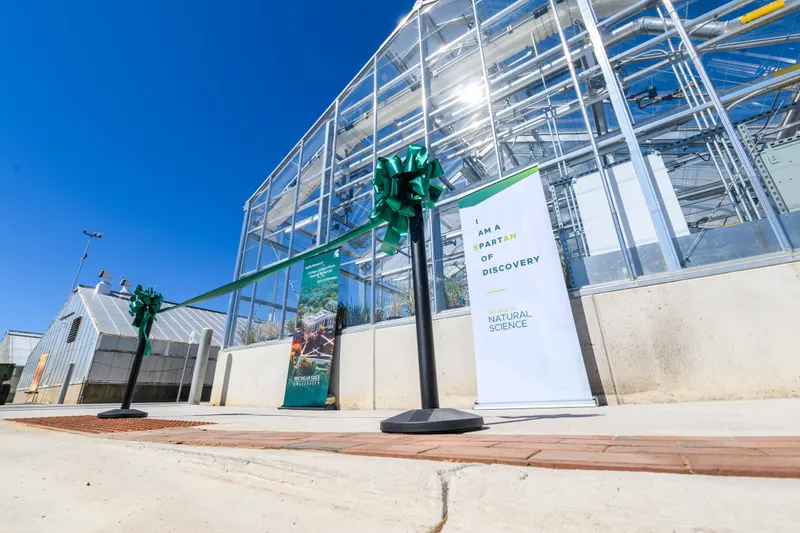
In an age where federal funding has come under increasing scrutiny, the United States Department of Agriculture (USDA) is still investing in the future of greenhouse production. Their National Institute of Food and Agriculture (NIFA) just awarded over $121 million to improve agricultural research across the country. Among these recent awards were several recipients with dedicated projects for greenhouse research and production. Four universities received a combined $19 million, with the largest chunk ($16.2 million) going to Michigan State University to support their ongoing greenhouse renovations.
Michigan State is in the midst of a $40 million plant science and greenhouse renovation project, which has positioned it as one of the leading greenhouse research centers in the world. While over 60% of its renovations are currently complete, the new NIFA award will be used to upgrade the remaining 40% with new LED lights and environmental controls. This contributes to what will eventually be over $73 million in greenhouse investment at MSU – a truly profound number. The cooperation between federal, state, and university administration in Michigan is unique and welcome. Each area has its own priorities, but when all partners work together, great things can happen for the industry and the country.
Other funded projects include $200,000 in planning funds for modernizing the Fabian Garcia Greenhouses at New Mexico State University, $250,000 for modernizing greenhouse spaces at the Pontotoc Experiment Station at Mississippi State University, and $2.5 million for modernizing greenhouses at the University of Arkansas.
It is important to note that none of these are new greenhouse projects. They are all modernizations and renovations of existing facilities. This saves time and money and allows projects to advance greenhouse production faster while using existing spaces. The future of greenhouse research is bright, diverse, and ready for the next generation of students!
You can see all funded projects here, and learn more about the MSU project here.